
Introduction to a Dystopian World
In recent decades, the notion of a dystopian society has become increasingly prevalent in popular narratives, captivating the imagination of readers worldwide. In such a world, the core tenet of freedom—particularly the freedom to access information—becomes a privilege stripped from the masses. This is the harsh reality in our tale of The Last Sanctuary, where a totalitarian regime enforces a ban on books and written knowledge, deeming them potential threats to the societal order.
The oppressive government wields power not only through surveillance and censorship but also through the suppression of intellectual freedom. Individuals are conditioned to accept a monotonous existence devoid of critical thought, resulting in a populace steeped in ignorance and conformity. In this chilling environment, creativity and individualism are rooted out, as the regime instills a culture that views literature as a dangerous conduit capable of inspiring rebellion or dissent.
As citizens are isolated from the profound insights offered by literary works, their ability to think independently diminishes. This impending loss of knowledge leads to a moral and intellectual decay of society as they transition from critical thinkers to mere followers, perpetuating a cycle of dependence on the dictates of the state. Without books, individuals struggle to comprehend the world beyond their immediate surroundings, leading to a widespread acceptance of propaganda and distortions of truth.
The implications of such a society resonate profoundly, as the consequences of a world devoid of literature reach beyond the individual, causing collective stagnation. The absence of diverse perspectives and innovative ideas impedes social progress, ultimately manifesting in a bleak existence marked by uniformity and fear. Therefore, as we delve deeper into the narrative of The Last Sanctuary, we examine not only the characters within this dystopian domain but also the broader implications of a civilization stripped of its literary heritage.
The Origins of the Book Ban
The enforcement of bans on books has frequently arisen from complex historical and political contexts, shaped by the need to maintain control over societal norms and beliefs. In many regimes, fears of rebellion play a pivotal role in the prohibition of literature, as the potential influence of dissenting ideas can challenge the status quo. Governments have historically perceived certain texts as threats, deeming them capable of inciting unrest and undermining authority. This anxiety often catalyzes a broader agenda of censorship, with political leaders seeking to mitigate risks they associate with the dissemination of controversial or revolutionary thoughts.
The manipulation of propaganda also significantly contributes to the enforcement of book bans. By controlling the narratives that circulate within a society, those in power can effectively shape public perception and foster a homogenized belief system. Literature that presents alternative viewpoints or critiques of existing power structures poses a significant challenge to this monopolization of information. As such, authorities enact bans on books that contain ideologies counter to their political aims, seeking to eliminate any possible sources of dissent.
Moreover, the desire for control extends beyond mere governance; it permeates the very fabric of cultural identity. Regulating what can be read allows a regime to dictate not only the thoughts and beliefs of its citizens but also their understanding of history and morality. In this way, the censorship of literature becomes a tool that enables the preservation of power, inhibiting the populace’s ability to form independent opinions.
In summary, the origins of book bans are deeply intertwined with a confluence of historical fears, the utility of propaganda, and a relentless pursuit of control over societal consciousness. Understanding these factors is essential in dissecting the implications of a world where literature is censored.
The Secret Library: A Hidden Haven
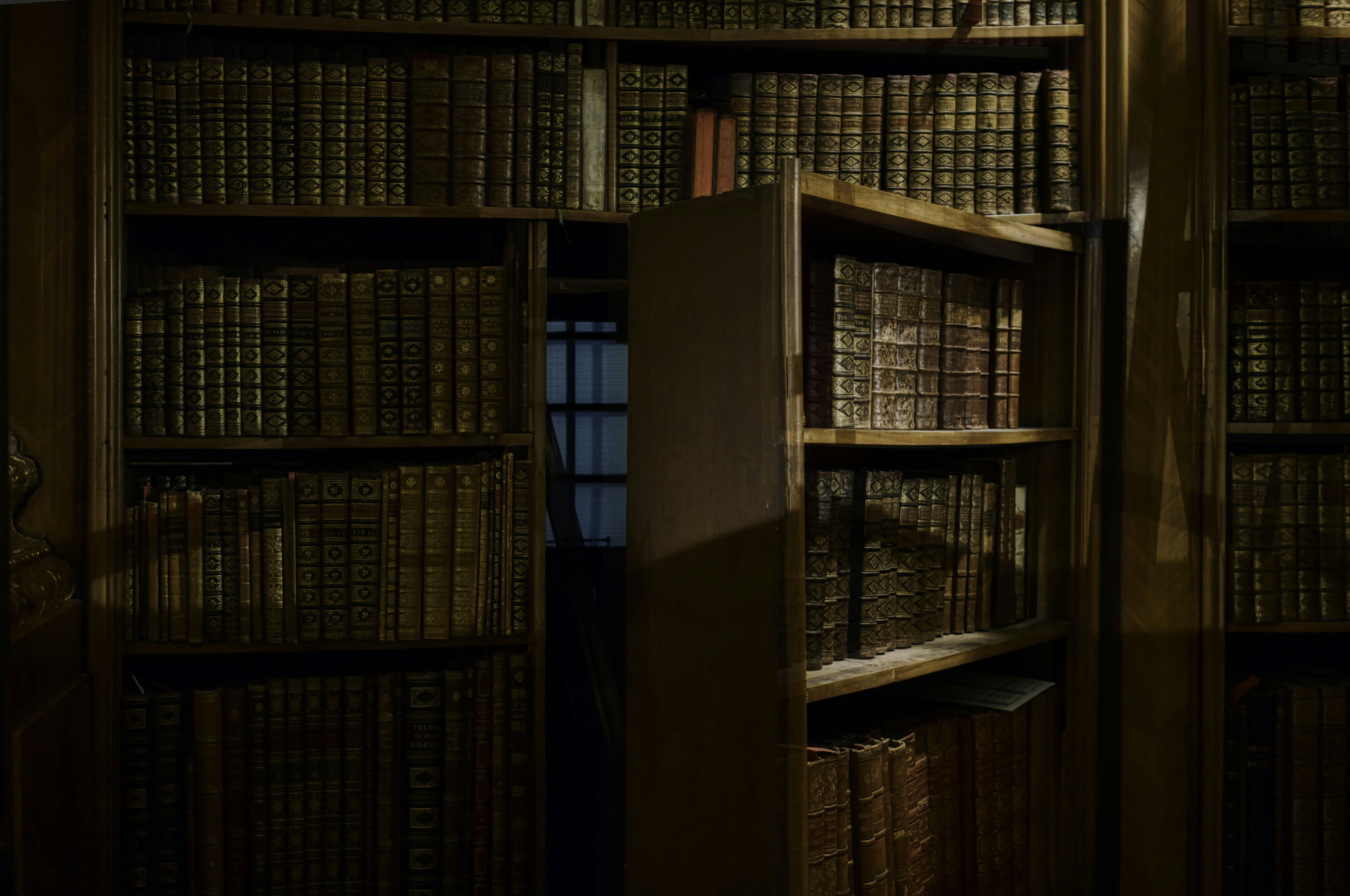
In the shadowy corners of a crumbling city lies the Secret Library, a sanctuary of forbidden knowledge that has remained concealed from the watchful eyes of a tyrannical regime. Tucked away beneath the remnants of an ancient structure, this library serves as the last bastion for those seeking solace in literature that has been outlawed. Its entrance, veiled by a heavy iron door covered in rust, requires a combination of old-world knowledge and modern ingenuity to unlock, ensuring that only the most determined seekers can gain access to its invaluable contents.
This hidden haven is fortified not just by physical barriers, but by a network of loyal guardians who risk their lives to protect its treasures. These individuals, commonly referred to as “The Keepers,” are a collection of scholars, rebels, and everyday citizens who have banded together with a singular purpose: to preserve the collective wisdom encapsulated within the library’s walls. They understand the significance of literature in shaping thought and culture, and they are willing to confront the dangers posed by oppressive forces to maintain access to this repository of knowledge.
To ensure the library remains undiscovered, The Keepers employ various strategies, such as employing codes and secret pathways that connect to the larger underground networks dedicated to disseminating information. They create safe havens where individuals can convene, share ideas, and read together, each gathering becoming a revolutionary act against censorship. Despite the constant threat of exposure and consequences, the underground movement continues to thrive, fueled by the belief that literature possesses the power to inspire change.
The Secret Library is more than just a physical space; it symbolizes the resilience of the human spirit in the face of adversity. Through silent acts of defiance, the keepers and patrons alike challenge the narrative imposed by their rulers, striving to keep the flame of knowledge alive in an otherwise dark world.
Characters in the Shadows
The Last Sanctuary is a richly woven tale that introduces a cast of characters, each crucial to the unfolding narrative centered around the forbidden library. At the heart of the story is Elara, the protagonist who stumbles upon the library in her search for truth. A daring young woman driven by an insatiable curiosity, Elara represents the human spirit’s undying quest for knowledge. Growing up in a city dominated by an oppressive regime, her inherent love for books is complicated by the danger they pose. This determination leads her to form a pivotal connection to the library, viewing it not just as a storehouse of knowledge, but as a beacon of hope against tyranny.
Supporting Elara are her allies: Kael and Liora. Kael, a former librarian, possesses extensive knowledge about the library’s history and its hidden secrets. His past is marred by loss, having witnessed the brutal eradication of literature he cherished by the oppressive authorities. This fuels his motivation to protect the library at all costs. Liora, a skilled hacker, contributes her tech-savvy ingenuity to the cause. She was once an ardent follower of the regime but had a transformative experience that sparked her rebellion against censorship. Together, they embody the resistance against the suffocating grip of their society.
In stark contrast to the protagonists are the antagonists: the Warden and his enforcers. The Warden epitomizes the regime’s ambition to erase dissent through literary destruction. He is a cold, calculating figure whose fear of knowledge drives him to brutal measures to maintain control. His relentless pursuit of Elara and her allies illustrates the lengths to which the regime will go to suppress freedom of thought. Through these characters, readers are invited to explore the complex dynamics of power, knowledge, and rebellion, engaging with each character’s motivations and the thematic depth they provide to the narrative.
The Power of Knowledge and Books
In any society, knowledge serves as an essential foundation for growth, critical thought, and cultural development. Literature, in particular, captures the human experience, allowing us to not only reflect on our lives but also to learn from the journeys and challenges faced by others. Books have historically been both instruments of enlightenment and targets of censorship, often causing regimes to fear the transformative power of knowledge. Banned books, which include literary classics, possess the ability to provoke thought and inspire change, highlighting the role of literature in shaping societal norms.
For instance, in Ray Bradbury’s “Fahrenheit 451,” the protagonist grapples with the oppressive nature of a world devoid of literature, revealing how the absence of books leads to a stagnation of ideas and individual thought. Another powerful example can be found in George Orwell’s “1984,” where the regime’s control over language and thought illustrates literature’s ability to challenge authority and provide individuals with a voice. Such examples underscore literature’s potential to incite resistance and ambition within oppressed populations.
Moreover, the beauty of words is often found in their capacity to foster empathy and understanding across diverse cultures. The stories and experiences conveyed through books can serve as bridges that connect individuals and communities. In the face of authoritarian censorship, the yearning for knowledge persists, as individuals seek out the forbidden truths contained within the pages of these works. Thus, the fear of books by totalitarian regimes merely emphasizes their importance; through literature, individuals discover the power to envision a world beyond their current limitations.
This underscores why knowledge remains a potent force in shaping society, forming the basis for dialogues that challenge injustice. Banned books teach us that literature transcends simple entertainment; it is a crucial catalyst for inspiring thought, advocating for rights, and ultimately spearheading societal evolution.
Choosing to resist the imposed ban on access to the library presents numerous risks, both personal and collective. Those who dare to defy authority demonstrate a profound commitment to the pursuit of knowledge, yet they often face dire consequences as a result of their actions. The decision to engage with the forbidden library can come with substantial sacrifices, including the loss of personal relationships, employment, and even freedom. The act of resistance, while noble, can lead individuals down a perilous path fraught with danger.
Among the most immediate threats for those who resist are the risks of imprisonment or even more severe forms of punishment. Authorities are keen to suppress any dissent that emanates from individuals seeking knowledge beyond their control. News reports frequently document the fate of those who have been caught attempting to breach the library’s restrictions—individuals have been known to face harsh sentences, including lengthy prison terms. Such outcomes instill fear and hesitation among potential allies of the library, creating an atmosphere of apprehension that serves to reinforce the regime’s power.
Moreover, the moral dilemmas that arise from the decision to engage with the library are significant. Individuals must grapple with questions regarding the risks posed not only to themselves but also to their families and friends. They may find themselves pondering whether the pursuit of knowledge justifies jeopardizing the safety of loved ones. Additionally, the broader community may be affected, as acts of rebellion could incite crackdowns that impact a larger segment of society. The struggle for access to knowledge is not merely a personal battle; it is entwined with communal repercussions and ethical considerations.
Ultimately, the journey of those who choose to resist is marked by a complex interplay of courage, sacrifice, and profound moral questioning. As they navigate the treacherous landscape of dissent, each decision can weigh heavily on their conscience, laying bare the true costs of their fight for access to the library’s invaluable resources.
Tension and Conflict: The Struggle for Freedom
The struggle for freedom within the narrative of “The Last Sanctuary” intensifies as the regime’s oppressive grip tightens around the forbidden library. This sanctuary, a beacon of knowledge and solace, becomes the focal point of conflict between the authoritarian powers and the brave group of protectors who seek to defend its treasures. As this clash escalates, the stakes grow higher, revealing the lengths to which individuals will go to preserve their freedom and access to information.
Key events punctuate the growing tension: the regime launches a series of meticulously planned raids, aiming to dismantle the library and neutralize the defiant guardians. During these operations, the protectors exhibit remarkable courage, staging narrow escapes that highlight their determination. Each successful evasion serves to amplify the urgency of their plight, as they are aware that each encounter could very well be their last.
Amidst the chaos and fear, moments of bravery surface, particularly when individuals sacrifice their safety for the collective good. These instances are not merely acts of defiance; they symbolize the human spirit’s unwavering desire for freedom in a world shrouded in oppression. The protectors’ camaraderie strengthens, empowering them to face an enemy that seems insurmountable. Their commitment to the library fuels a relentless hope that resonates throughout the community underscoring their shared goal of safeguarding knowledge.
As the regime escalates its efforts to crush dissent, the protectors increasingly find themselves on the front lines of this fight for liberty. Each confrontation serves to not only heighten the stakes but also to illuminate the profound impact that access to knowledge holds in a dystopian society. The escalating conflict, marked by tensions and personal sacrifices, becomes an integral part of their struggle for freedom, epitomizing the narrative’s central theme.
The Impact of the Library on Society
The existence of the secret library within the dystopian world presents a dramatic shift in the social fabric of a suppressed society. Initially, access to its wealth of knowledge serves as a beacon of enlightenment for individuals who had been deprived of information, creating a profound sense of awakening among them. This previously hidden repository of books offers not merely stories and history but also ideas that can challenge the status quo and inspire change. The library’s sanctity becomes a symbol of resistance against the authoritarian regimes that seek to control and manipulate information.
As knowledge begins to circulate, its impact resonates far beyond the initial group of readers. Information transforms into powerful currency, fostering discussions that question the narratives imposed by the ruling powers. The library functions as a catalyst, inciting curiosity and promoting critical thinking among those who dare to delve into its contents. This gradual enlightenment fuels a movement where the inhabitants develop a more profound understanding of themselves and their rights. In essence, the library acts as an incubator for revolutionary ideas that can upend oppressive systems.
The ripple effects of access to knowledge become increasingly evident. Individuals, once passive recipients of controlled information, begin to engage in conversations that challenge the barriers erected by censorship. The newfound awareness empowers them, encouraging acts of defiance that challenge the limitations placed on their lives. Communities start to form around shared knowledge, leading to collaborations that breed further exploration and advocacy for freedom of thought.
Through the lens of the secret library, society learns that knowledge is not only a means of personal growth but also a foundation for collective empowerment. This awakening, ignited by the existence of the library, reinforces the idea that access to information is intrinsic to human dignity and autonomy, ultimately leading to a society that is no longer content to live under the shadows of ignorance.
Conclusion: Hope in Dystopia
In a world overshadowed by oppression, the themes of hope and resilience emerge as prominent forces that challenge the fabric of despair. The narrative encapsulated in the tale of a forbidden library exemplifies the indomitable spirit of individuals willing to confront the harsh realities of their environment. These characters serve as beacons of inspiration, demonstrating that even within a dystopian reality, the flicker of hope can illuminate the path toward a brighter future.
The preservation of knowledge becomes a crucial theme in this context. Books symbolize more than mere words on pages; they represent the collective wisdom of humanity and the potential for change. In societies where information is heavily regulated, the act of safeguarding such knowledge transforms into a subversive rebellion against oppressive systems. It empowers individuals by equipping them with the tools necessary to question, learn, and ultimately aspire for freedom.
Importantly, the story reinforces the notion that the journey toward enlightenment often begins with a single act of defiance. When individuals dare to rise against the constraints placed upon them, they not only pave the way for their own liberation but also inspire collective action. This ripple effect can kindle the fires of change, planting seeds of resistance that can flourish in even the most barren of landscapes.
In conclusion, the struggle portrayed in this dystopian narrative underscores the critical role of hope in the face of adversity. By valuing knowledge and embracing resilience, it becomes possible to envision a world transformed by justice and equity. The forbidden library stands not just as a sanctuary of lost words, but as a testament to the enduring human spirit—capable of overcoming the shadows that seek to silence it.